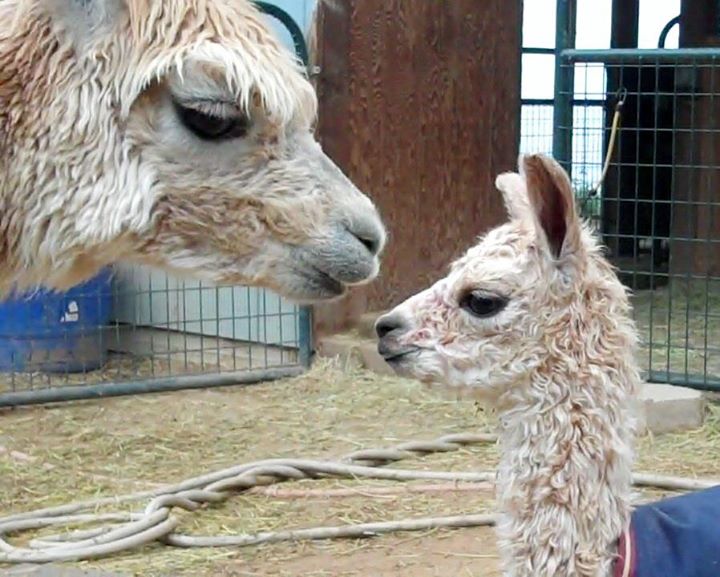
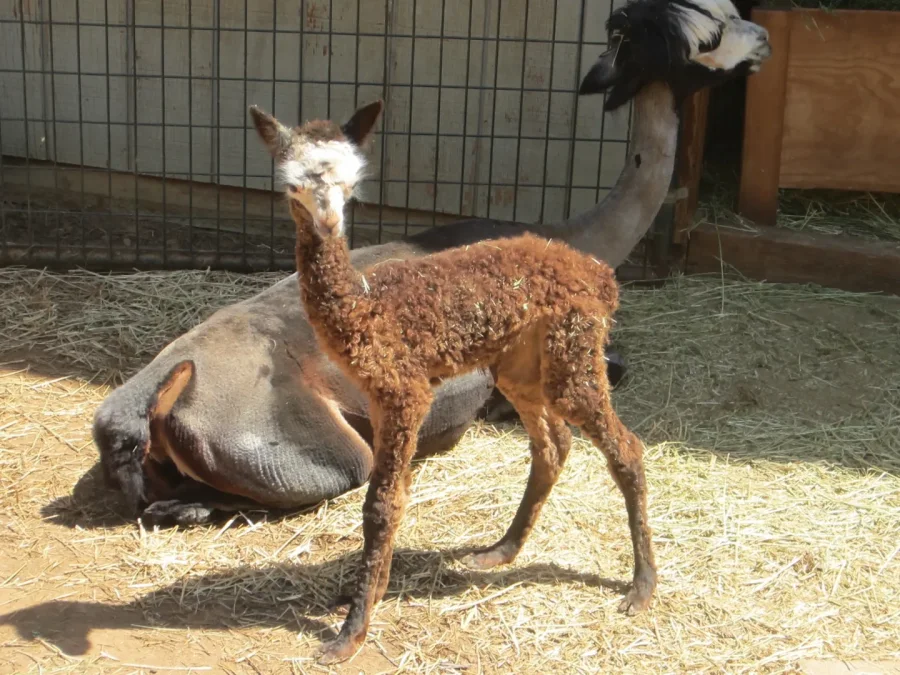
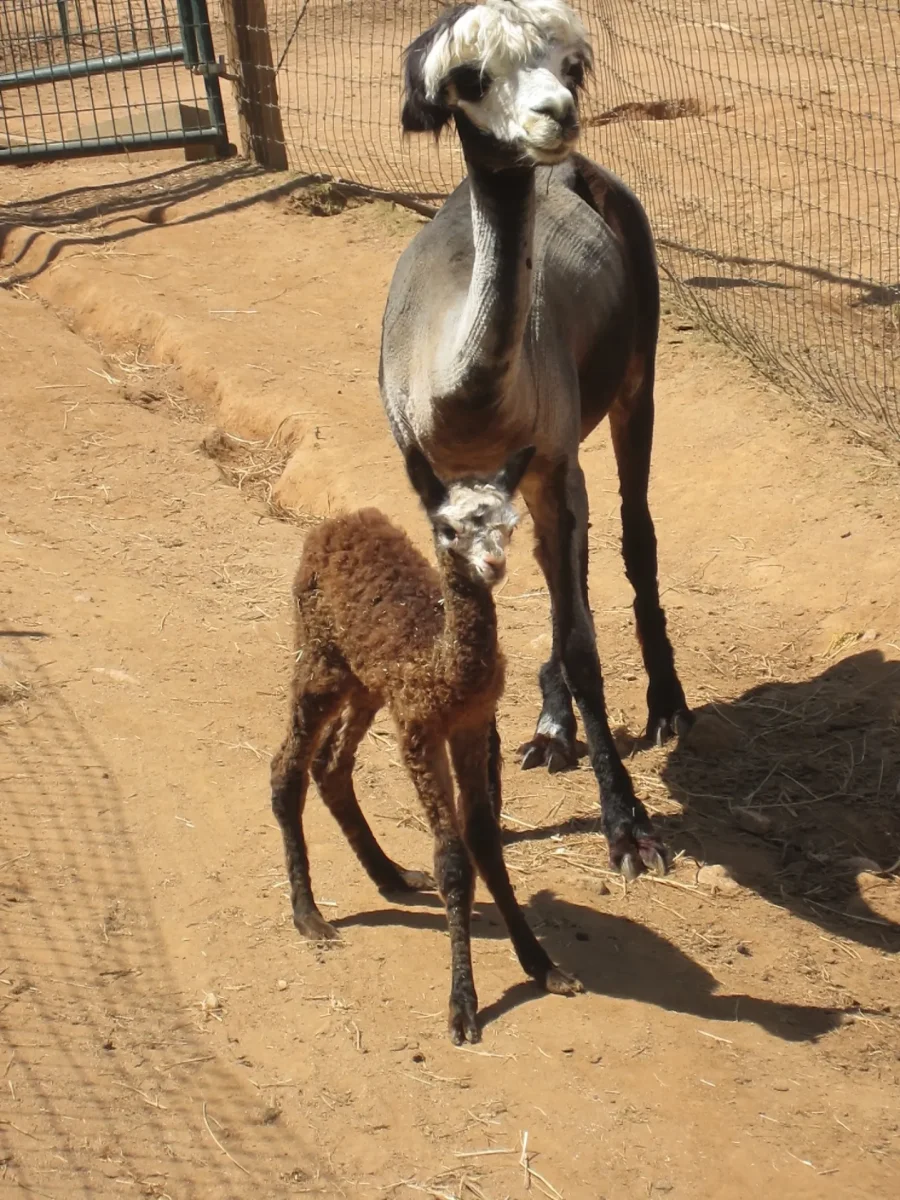
 “You’re in luck!” Dianna greeted us. “A baby alpaca (cria) has just been born this morning.” As often happens, it was an easy birth. “Alpacas have an 11-month gestation period, and most of the time the dam needs no help, Dianna explained. “I came out this morning and there she was!” The baby cria was just a few hours old and still a little unsteady getting to her feet when we walked into the pen. Dianna went on to tell us that she had approximately 100 births on the ranch since starting to raise alpacas in 2005.
Alpacas of Somerset Farm, in Somerset, California, is owned by Dianna and Jack Jordan. Why alpacas? “Well, as we approached retirement we knew we didn’t want to grow grapes like so many of our neighbors but did want a country lifestyle on our acreage with income, and we loved animals. We moved her in 1978 and our kids grew up here and over the years, family-owned wineries have become the primary draw to this area. We’re all living our dreams.” Now, as a retired high school teacher, Jack participates in the Home and Hospital program through the El Dorado Union High School District for students unable to attend classes but needing to continue their education.
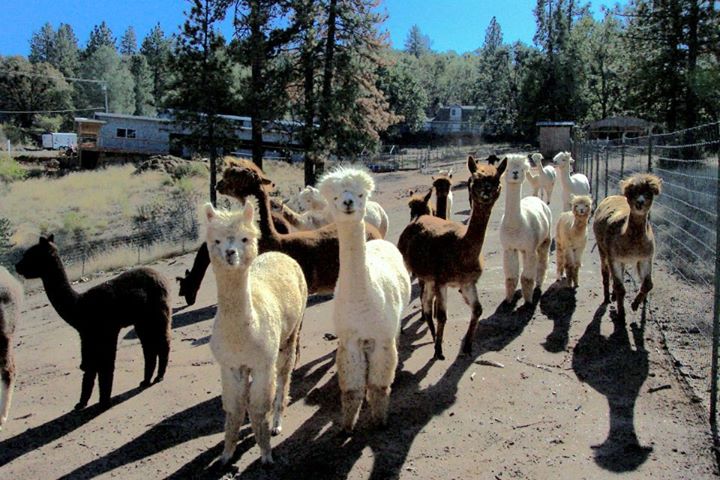
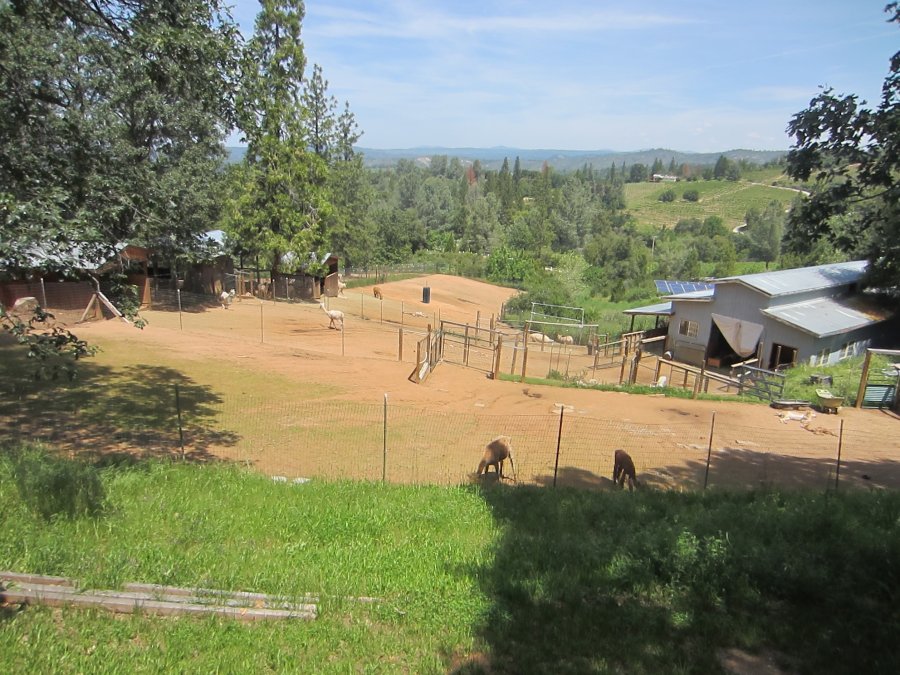
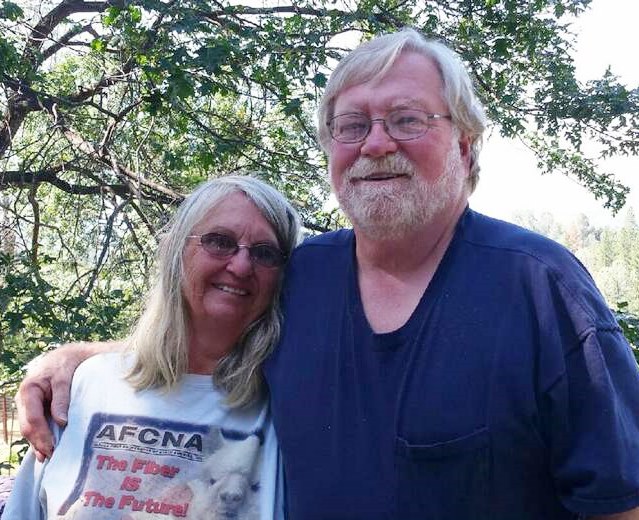 The Jordan’s herd numbers 65 and the harvest of fleece in the barn occurred just days before our visit, as usual about mid-May. The select group of huacayas and suris at Alpacas of Somerset Farm offers some of the best genetics available….from the ageless “tried and true” foundation imports to the “up-and-coming” North American bred and born.
Most alpaca ranches breed and sell exceptional alpacas with the focus on fiber quality and characteristics to advance the North American alpaca fiber production industry. ““I decided that I wanted to express my creative side by utilizing the fiber we produce to create fiber art. Dianna said.
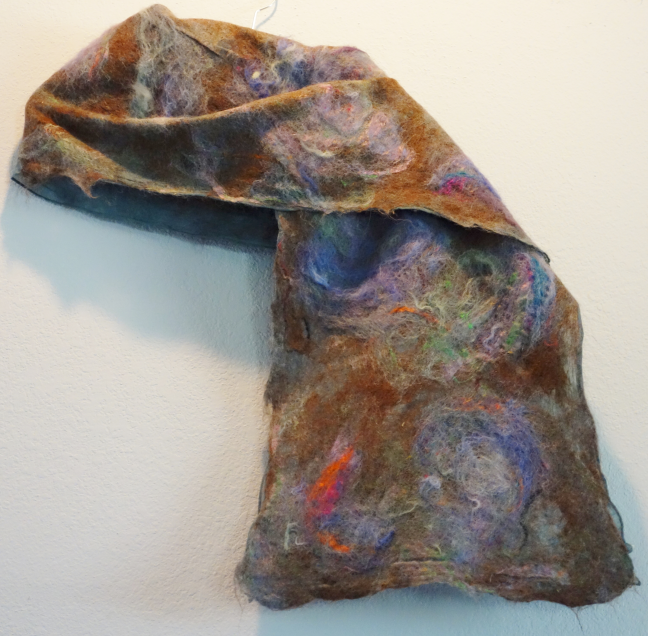
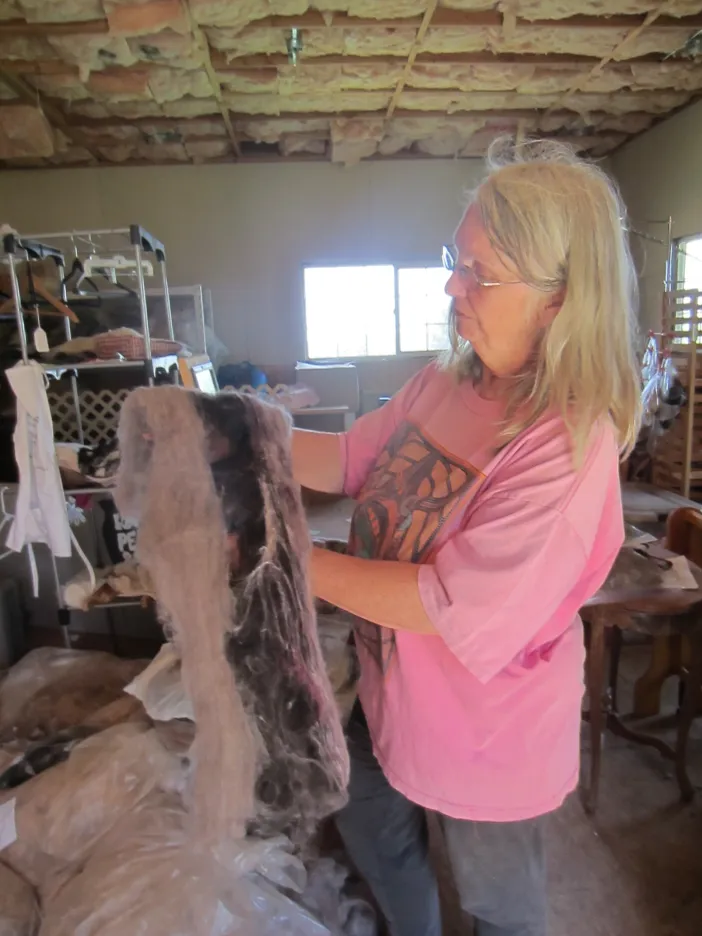 Dianna’s nuno felted* scarves and many other products are sold at shows such as the one in Oregon, FiberMania. To gain a better understanding of how breeding decisions affect the quality of fiber, Dianna immersed herself in the fiber production aspect of the industry. Her term as a board member on the Alpaca Fiber Cooperative of North America, Inc. (AFCNA) proved to be invaluable in terms of exposure to North American fiber production. As a perennial student she has attended advanced classes focused on breeding for quality fiber, hands-on classes focusing on sorting and grading fiber to maximize the quality of the finished goods, and several classes on how to prepare fleece for processing. She has recently transitioned to hand processing a “home-grown” fiber.
*Nuno felting is a fabric felting technique developed by Polly Stirling, a fiber artist from New South Wales, Australia, around 1992. The name is derived from the Japanese word “nuno” meaning cloth. The technique bonds loose fibre, usually wool, into a sheer fabric such as silk gauze, creating a lightweight felt. Nuno felting – Wikipedia, the free encyclopedia
 Betty is a California-based writer whose work explores local history, travel, food, and the people who shape community life. Her storytelling is rooted in curiosity, culture, and real-world experience.